Crewe Bus Interchange Crewe, UK
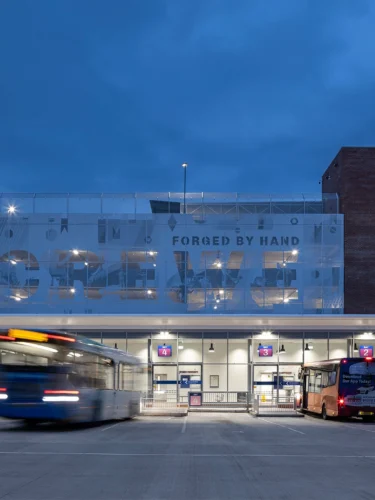
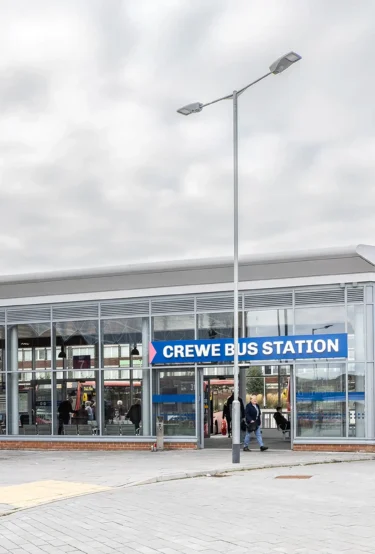
Crewe Bus Interchange is a modern transport gateway delivered as Phase 1 of Crewe’s wider regeneration.
The Crewe Bus Interchange and Multi‑Storey Car Park formed the first phase of a much larger town‑centre regeneration strategy originally conceived for the Royal Arcade area.
Although the broader leisure and retail components of the wider scheme were ultimately halted following the cancellation of HS2, the Council’s transport infrastructure remained a priority.
The existing 1960s bus station had become unsafe and outdated, and several peripheral car parks needed to be consolidated to release development sites elsewhere in the town.
Phase 1 therefore proceeded independently, with the Council investing directly in a modern transport interchange and a 390‑space multi‑storey car park to serve both current and future town‑centre needs.
Operationally Complex Phasing
We secured a Hybrid Planning consent for the full masterplan, obtaining outline permission for the wider regeneration and detailed approval for the transport components.
Following consent, we were novated to Bowmer & Kirkland to take forward the RIBA Stage 4 design and deliver the project on site. This phase required exceptionally careful planning as the new interchange was being constructed partly on the footprint of the existing operational facility. Maintaining continuity of bus services was a non‑negotiable requirement and shaping the construction sequence around that became one of the defining characteristics of the project.
To keep the bus station running throughout, we developed a detailed phasing strategy that included temporary bus running lanes, temporary operator accommodation and an eight‑bay temporary bus station. Once the new running lanes were complete, buses could be diverted, and the existing station demolished in a controlled sequence that kept passengers and construction activities safely segregated at all times. This required close collaboration with multiple bus operators, the Council’s regeneration team and the site management team. It also meant that design decisions needed to be practical, safe and buildable within a constrained, heavily phased environment.

Designing a Modern, Safe and Efficient Interchange
The interchange was designed to meet a comprehensive brief provided by Cheshire East Council, with safety, durability and operational efficiency at the centre of the design.
The arrangement includes two four‑metre‑wide running lanes connecting Victoria Street to the north with Delamere Street to the south, creating a clear and logical flow of bus movements through the site. To the east of the lanes, a ten‑bay drive‑in‑reverse‑out apron was developed, with one bay capable of accommodating full‑size coach operations and providing safe boarding from both sides.
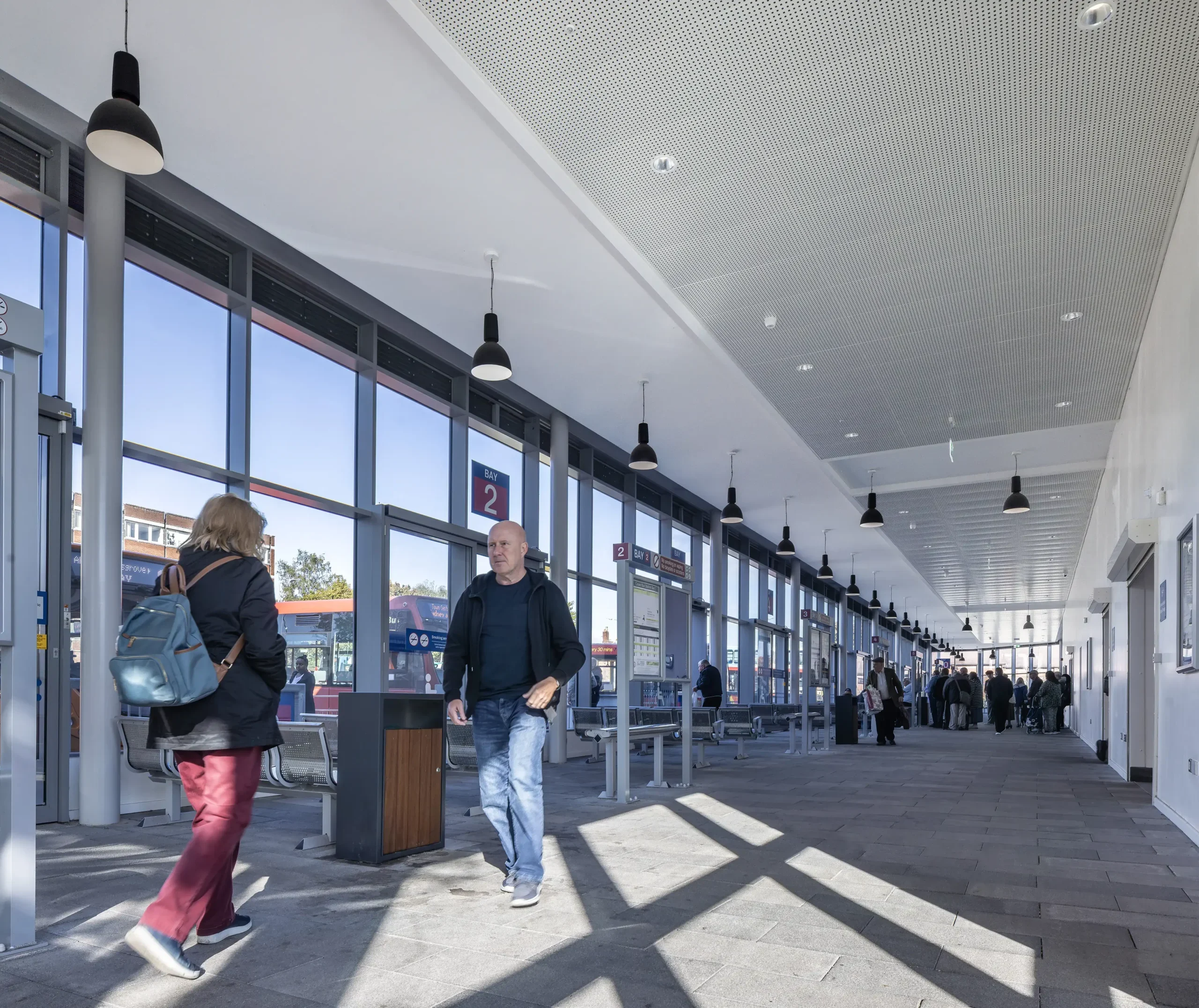
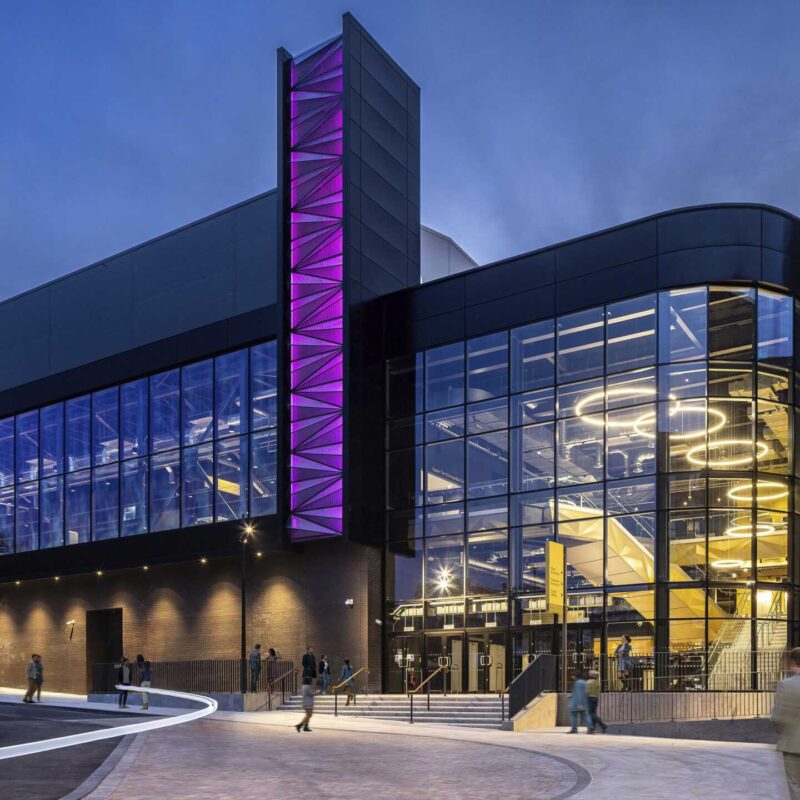
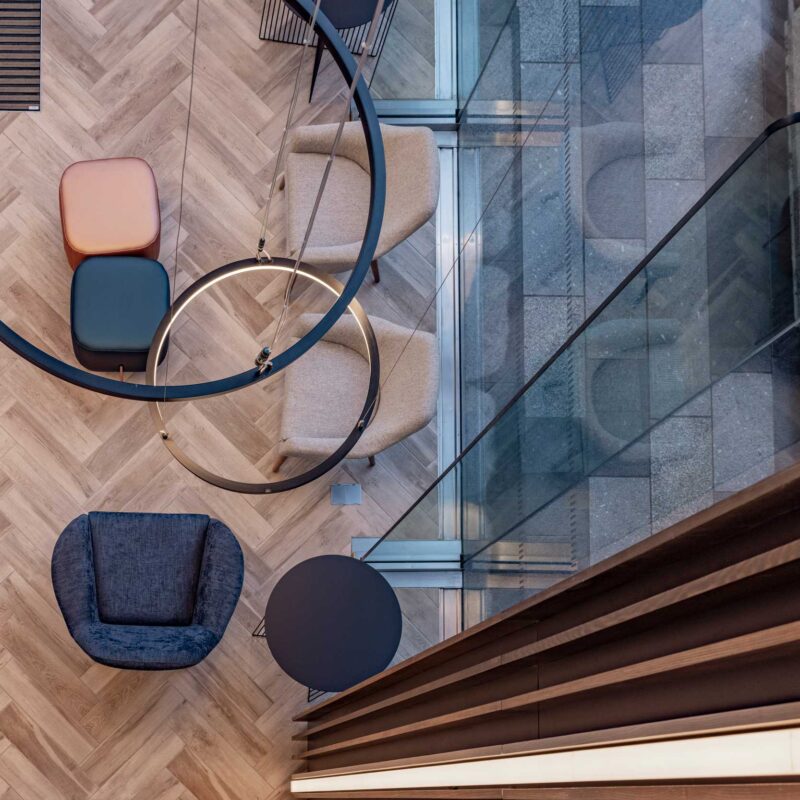
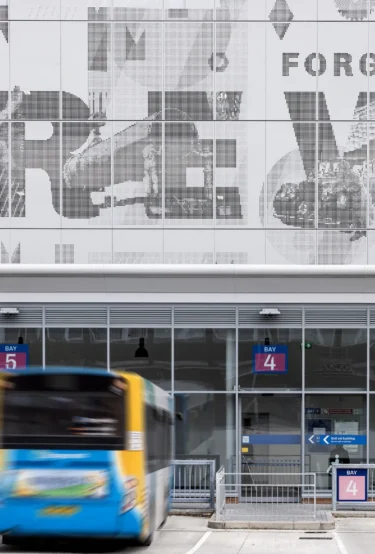
The passenger concourse forms the central architectural element of the interchange. Running the full length of the apron and fully glazed along its western edge, it provides bright, safe and highly visible waiting areas for each stand. Individual waiting zones include fixed seating, perch seating, wheelchair spaces and real‑time passenger information. Doors between the concourse and the boarding areas are automated and only open when a bus is present, reducing the risk of pedestrian movements into the apron.
The Façade
The façade was an important architectural element.
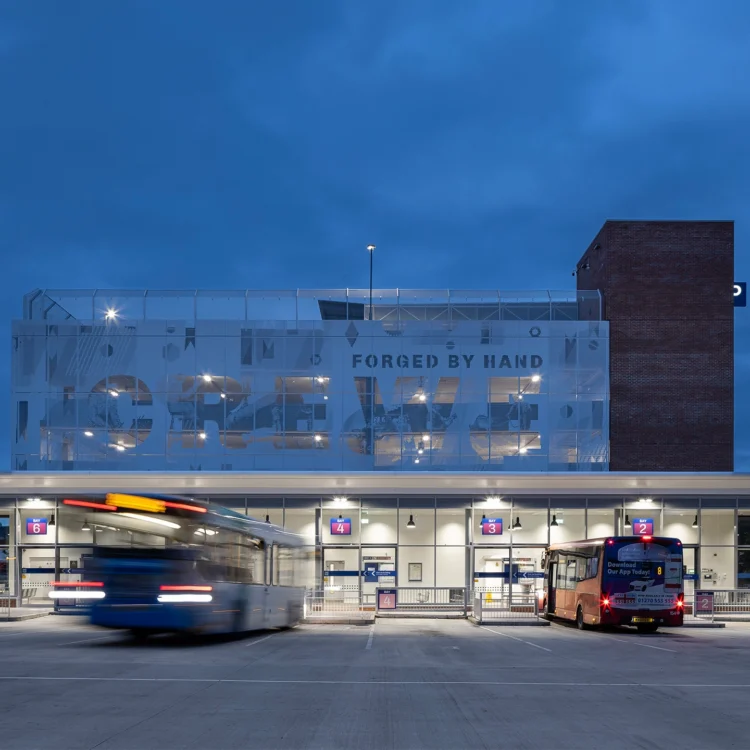
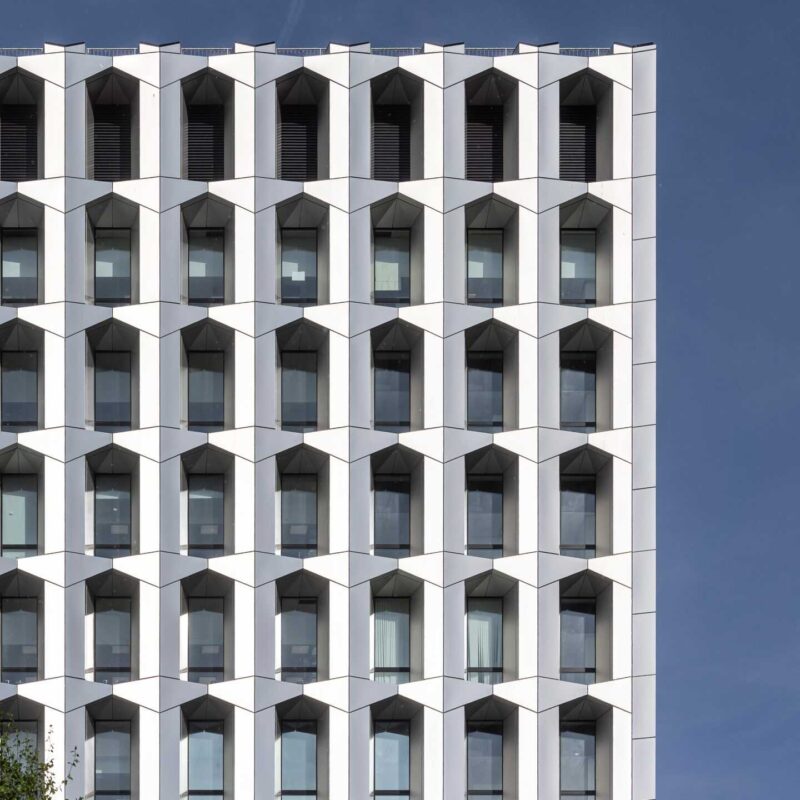
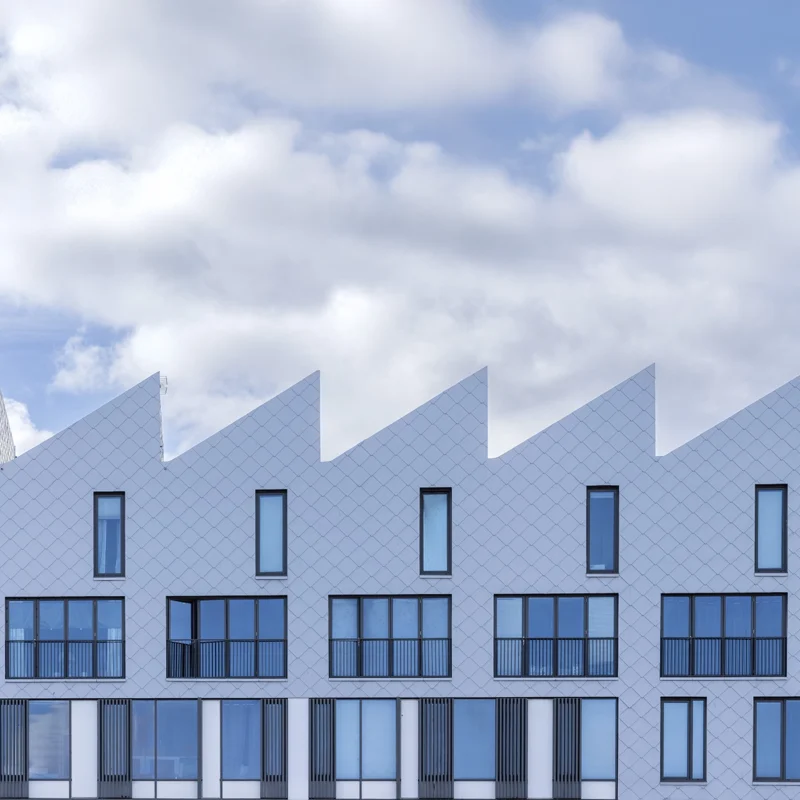
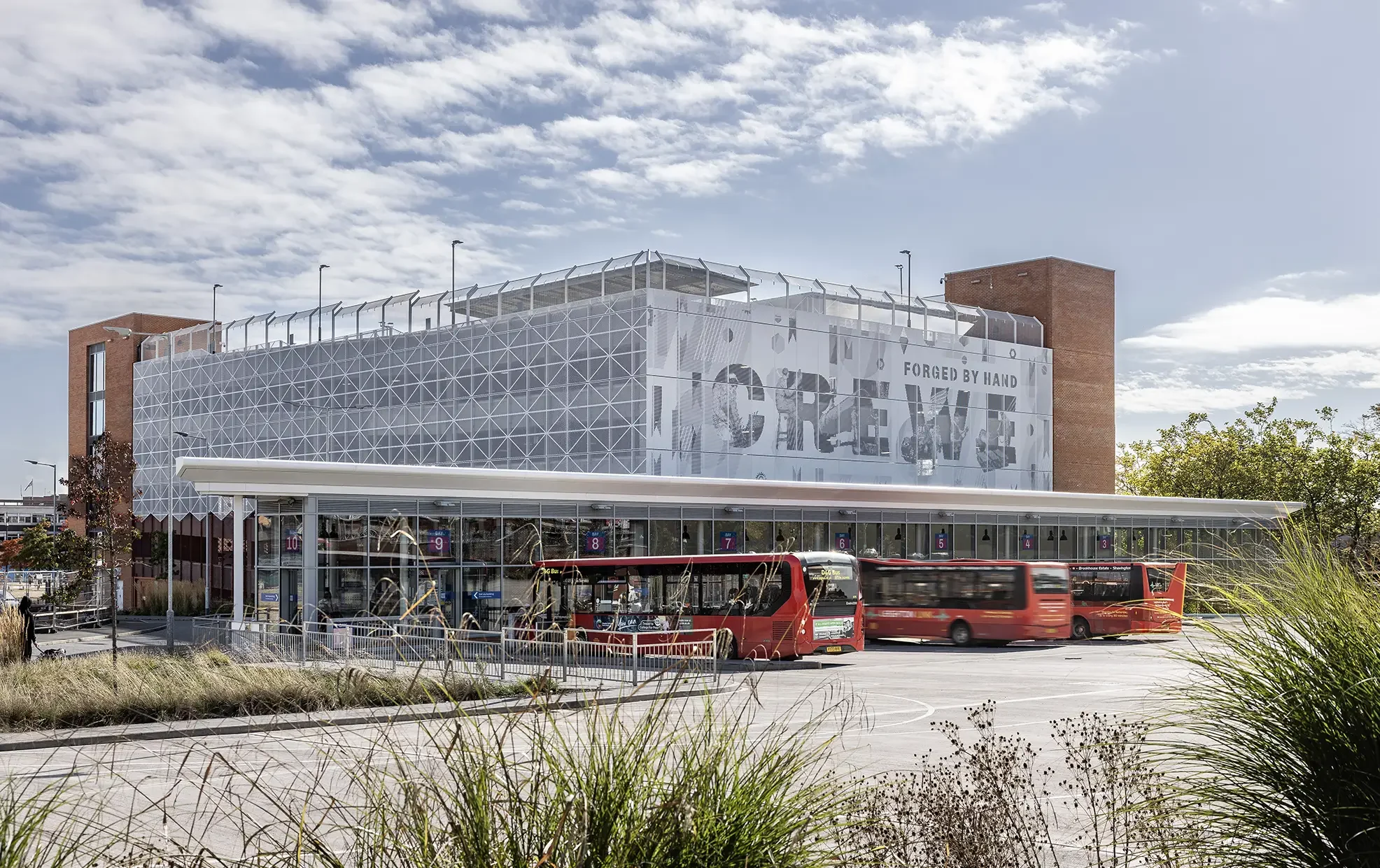
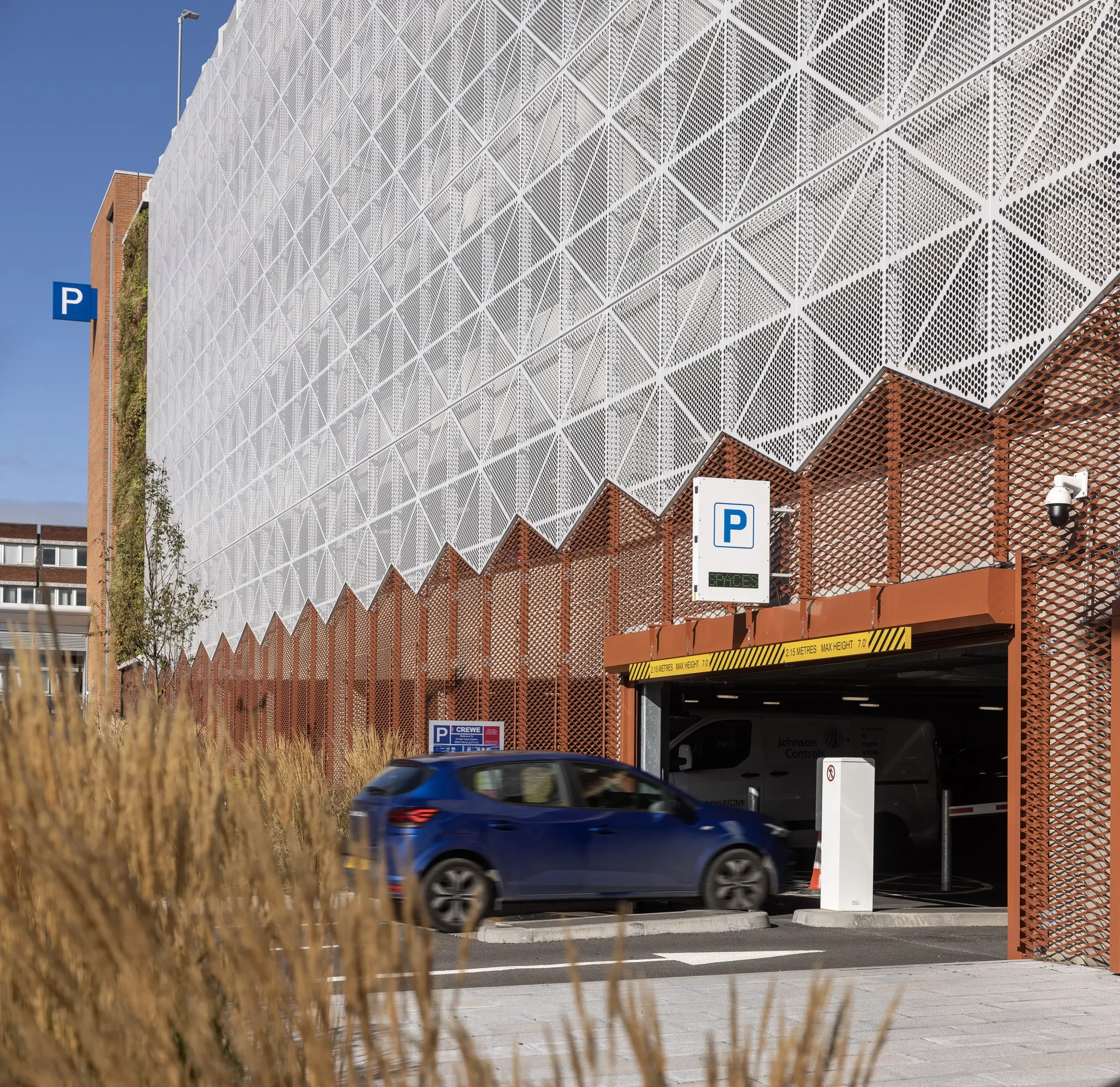
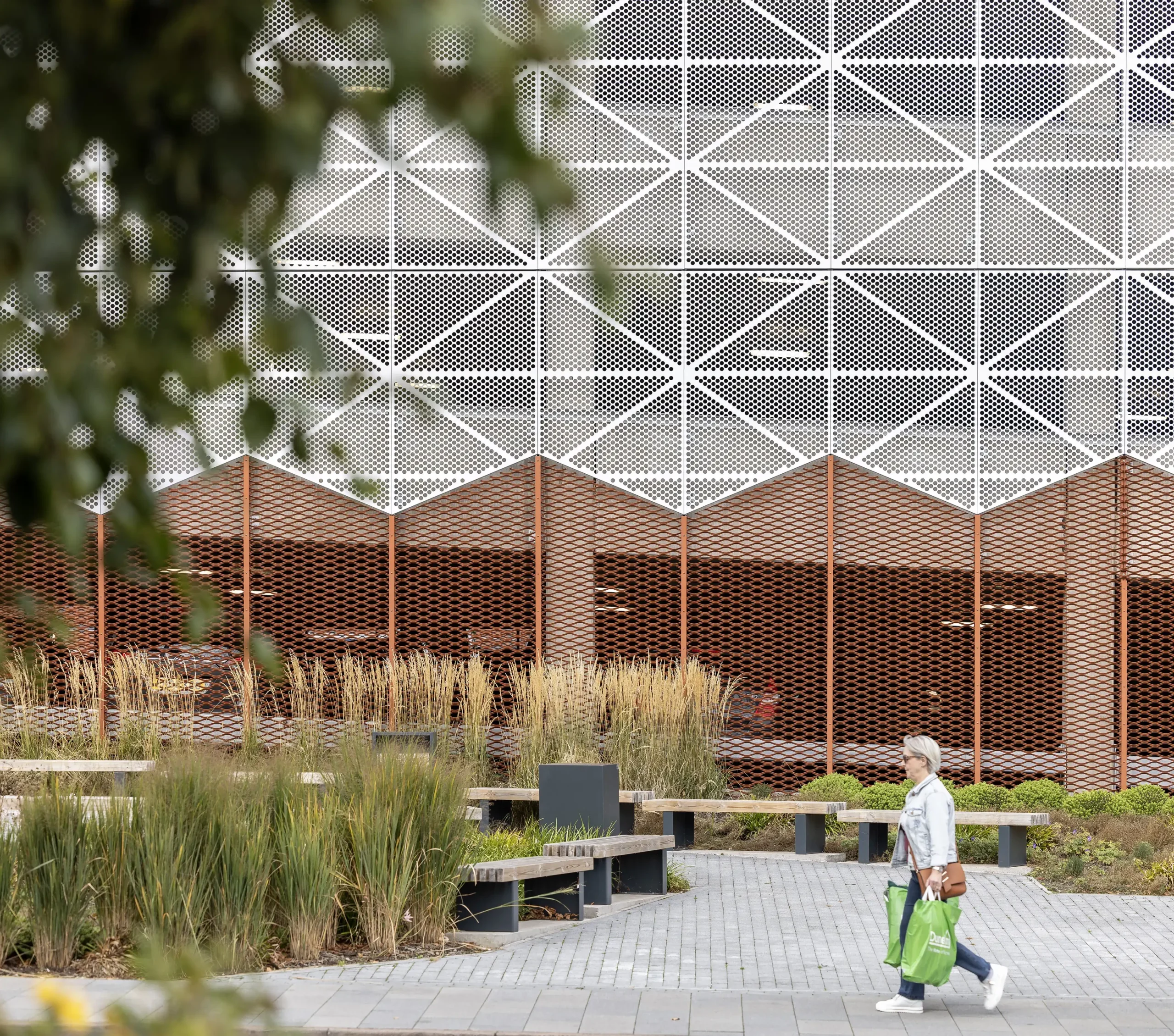
We developed a cladding system of perforated triangular aluminium panels arranged in a quilted pattern that breaks down the mass of the building while providing the open area required for natural ventilation.
A key innovation was the development of a combined guarding and vehicle restraint system using the façade itself. By strengthening the panel fixings and coordinating them with the 600‑millimetre precast concrete upstand, we were able to achieve the level of pedestrian guarding required without introducing visually intrusive handrails or additional barriers. This solution, developed with Maple, was tested and approved through Building Regulations and now forms an integral part of the architectural design.
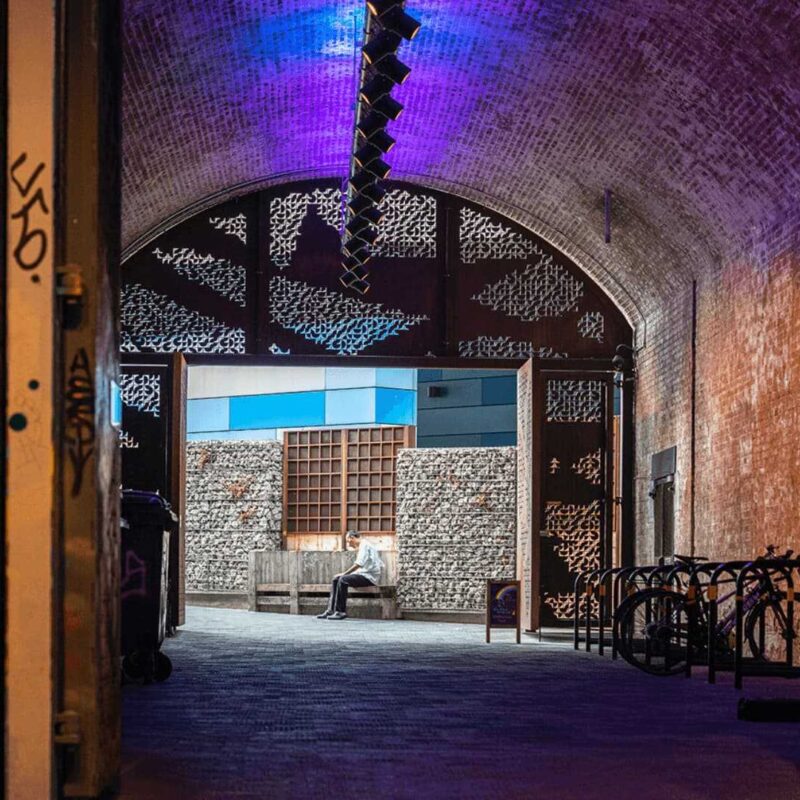
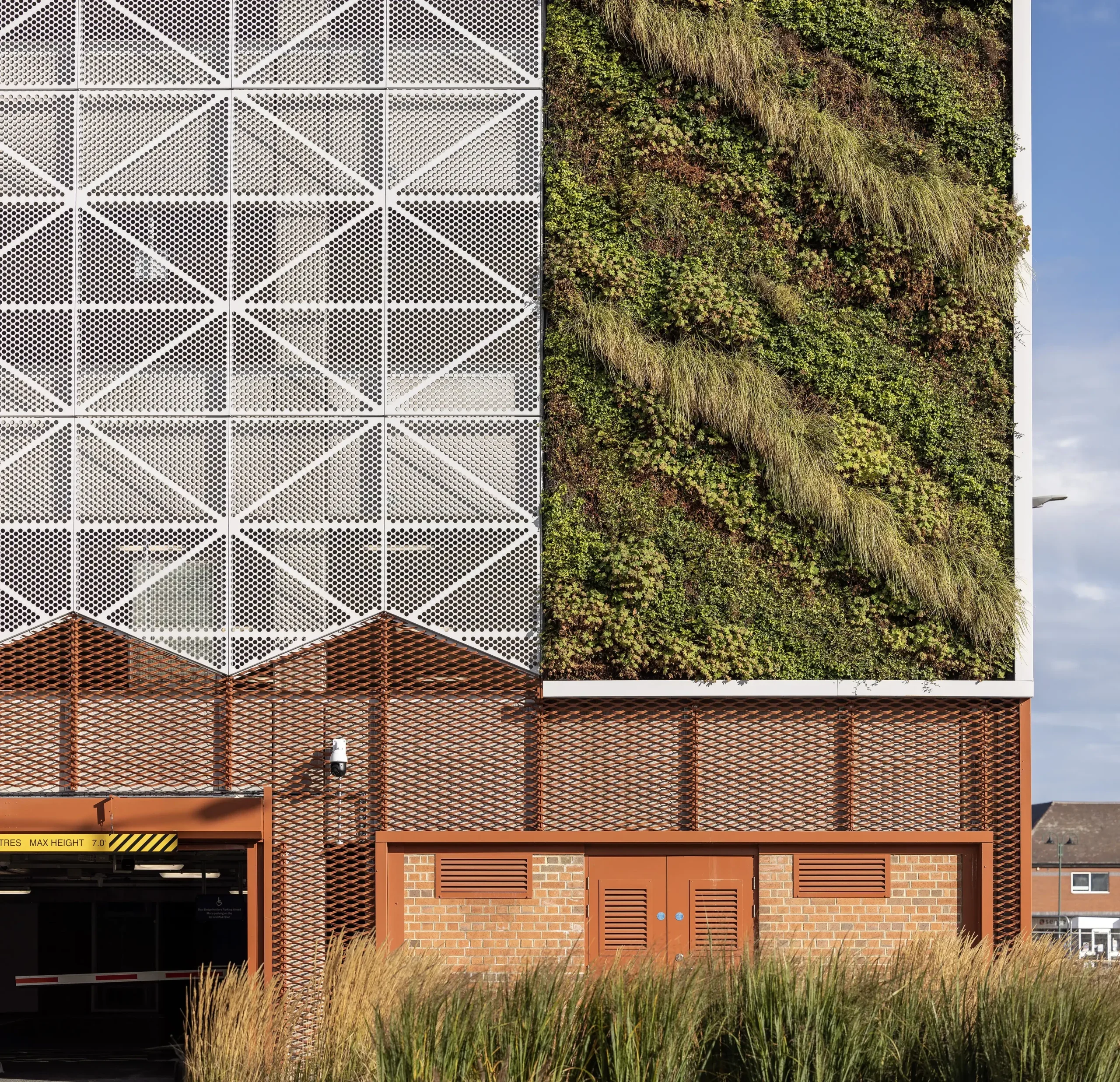
Additional enhancements include two large green walls on the southern elevation and a bespoke public artwork on the western elevation, produced through a local artist competition. The artwork, expressed through perforated metal panels, celebrates Crewe’s industrial heritage and allows light from the car park to filter through at night.
The Community
Extensive public realm improvements formed part of the transport phase.
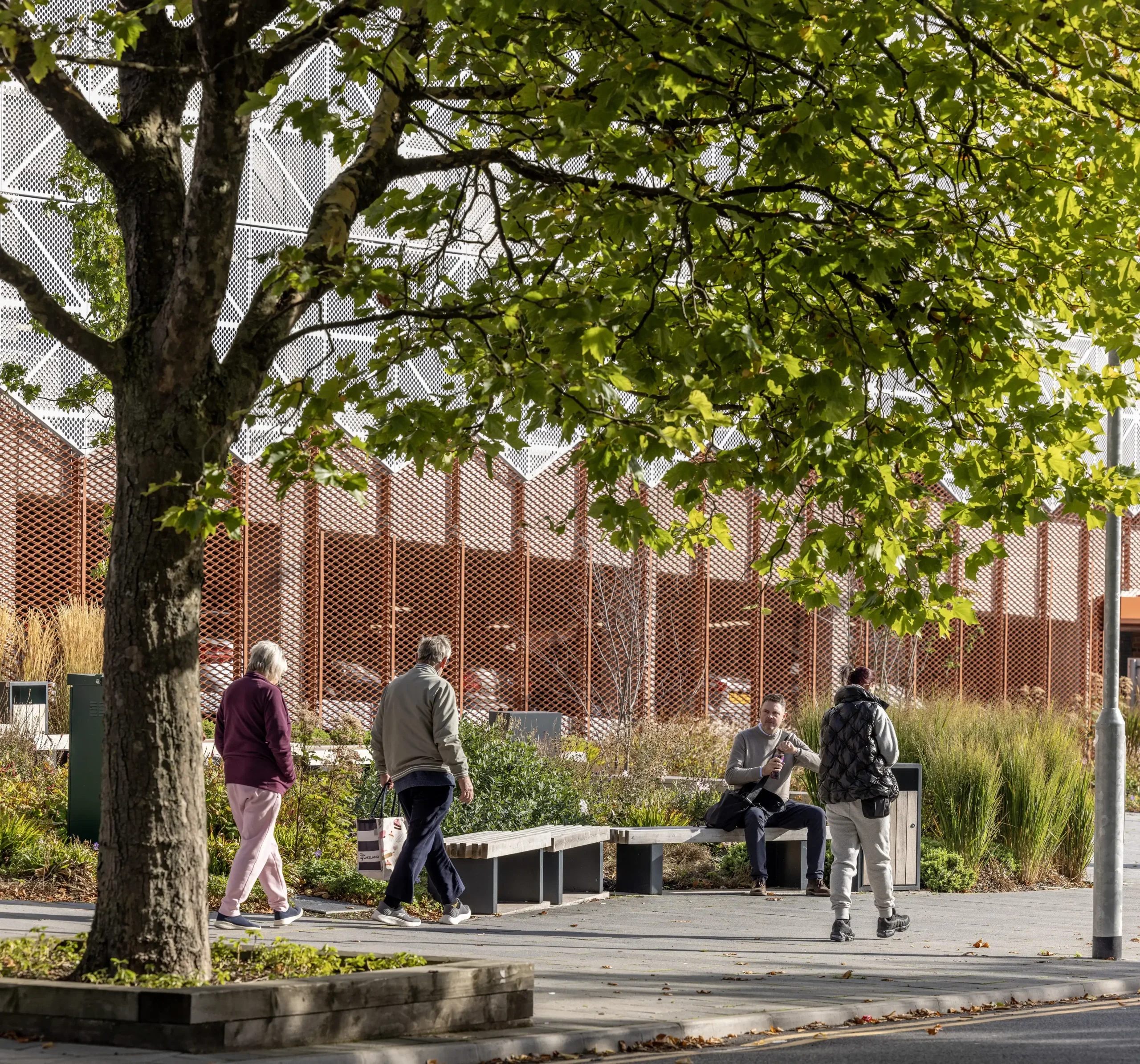
These include new landscaping to the south of the site with timber topped benches and planting, improved pedestrian connections and a consistent palette of paving materials that will extend seamlessly into any future development under Phase 2. The public realm intentionally sets a high standard for future town centre projects and creates a welcoming, modern environment around the interchange.
Stakeholder engagement underpinned every stage of the programme. Regular workshops were held with the bus operators, who contributed to the brief and provided insight into operational requirements. Where conflicting operational views emerged, we worked with the Council to manage expectations, explain constraints and maintain consensus. Engagement extended into the community through public consultations and ESG activity with local schools, community groups and a local church‑run food bank. Internally, the project was supported through frequent design team meetings, disciplined technical coordination and regular site visits, reflecting the complexity and public‑facing nature of the works.
Although it was conceived as the first part of a larger regeneration strategy, the completed bus interchange and MSCP now stand as a major civic improvement in their own right. They deliver a safe, modern and accessible passenger environment, replace an obsolete and unsafe facility, provide much‑needed structured parking, and create the foundation for future investment in Crewe town centre.
The project showcases our capability in transport architecture, complex phasing, stakeholder management and the delivery of durable, cost‑efficient public infrastructure within a constrained urban environment.
Every project starts with a conversation.
Let’s discuss your opportunities, constraints and questions.